Local waste water sampling
It’s a dirty job but someone’s gotta do it.
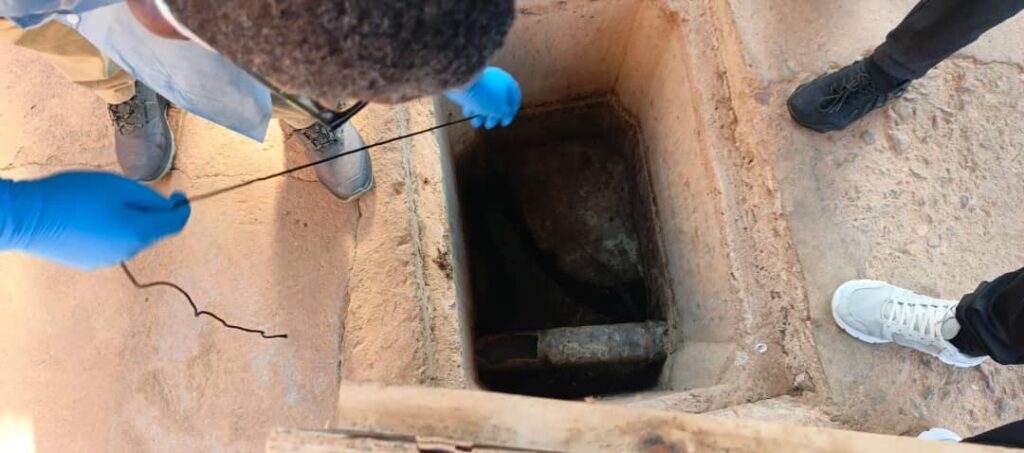
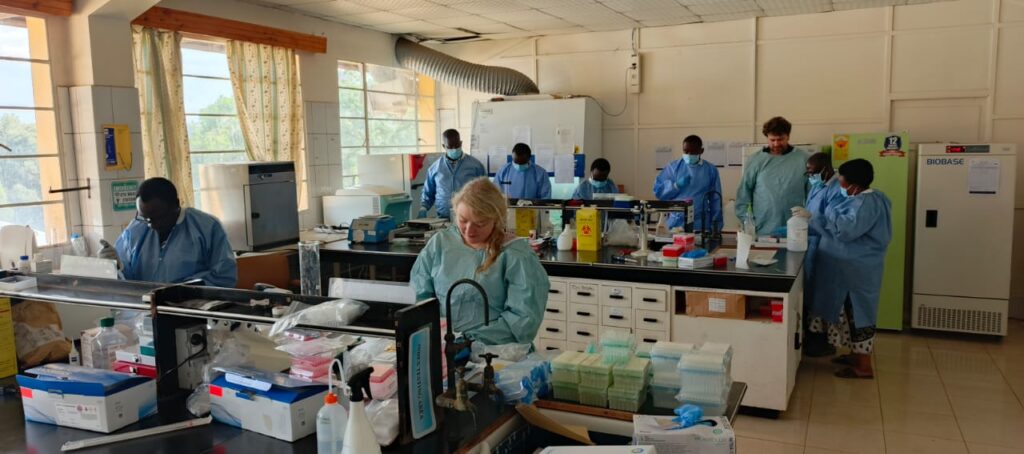
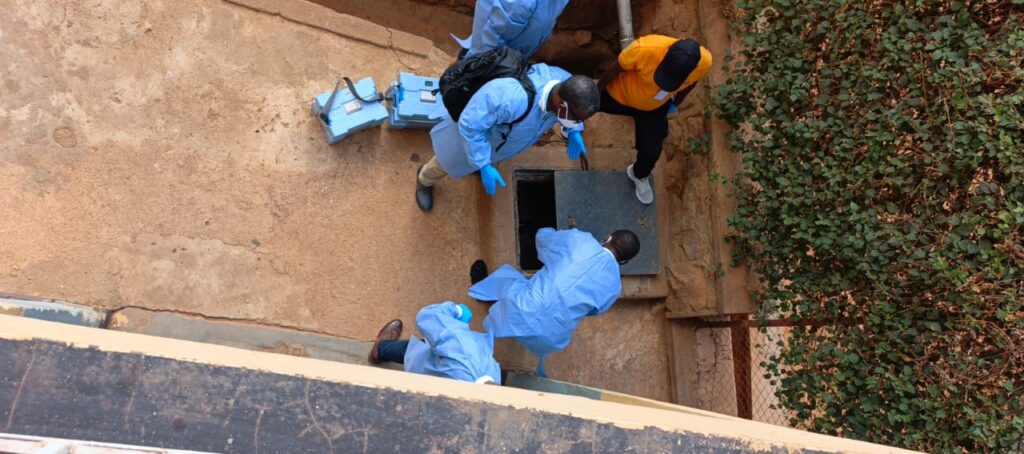
As part of the JUA KIVU project we are collecting wastewater samples from several places. The pictures show installation of passive samplers at the busiest public toilet in Kigali with around 5400 visits per day.
Wastewater sampling is a powerful tool for understanding community health.
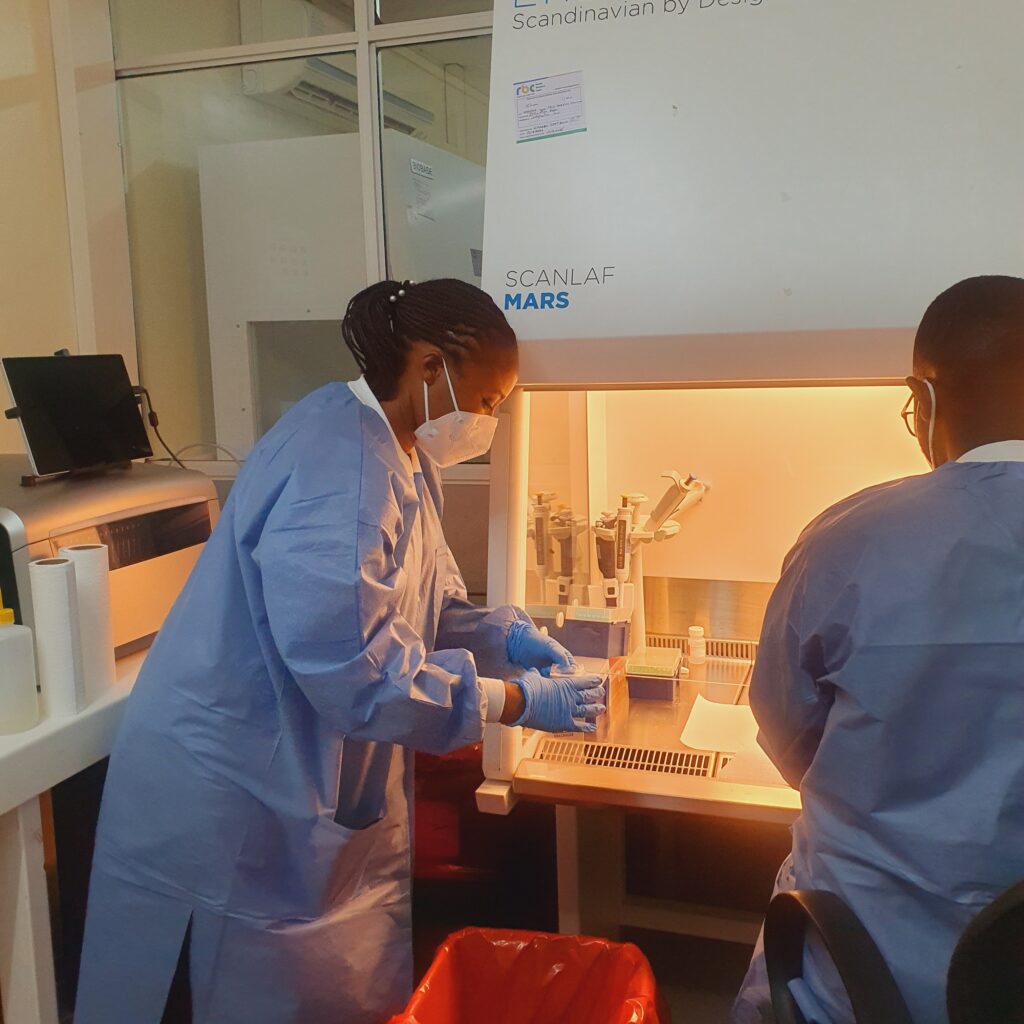
By collecting and analyzing samples from sewage systems, scientists can detect traces of viruses that people excrete—often before they show symptoms. This approach makes it possible to monitor the spread of mpox, but also other infections such as polio, influenza, or even emerging viruses, without relying on individual testing. Because wastewater reflects the combined health of an entire population, it provides a cost-effective, anonymous, and inclusive way to track diseases across large areas.
In the context of outbreak control, wastewater data can act as an early warning system.
When virus levels in wastewater rise, public health officials can respond quickly—by increasing clinical testing, sharing public health advice, or implementing targeted interventions. This proactive method helps prevent outbreaks from growing undetected and supports informed decision-making during public health crises. As global challenges from infectious diseases continue to evolve, wastewater surveillance is becoming an essential part of protecting communities and building resilient health systems.